

Does it really matter if I rinse my containers and tubs before putting them into the recycling bin? It is a question we get asked all of the time! Well, the answer is YES! It is pretty simple to recycle, but small actions like rinsing out tins and pots can make a huge difference in the overall process.
Why it matters
The importance of recycling and separating materials into your separate bins at home is well known, and we appreciate that households and businesses across the North East are making the effort to do this correctly. However, we do find that food contamination is one of the main causes of issues within our Materials Recycling Facility.
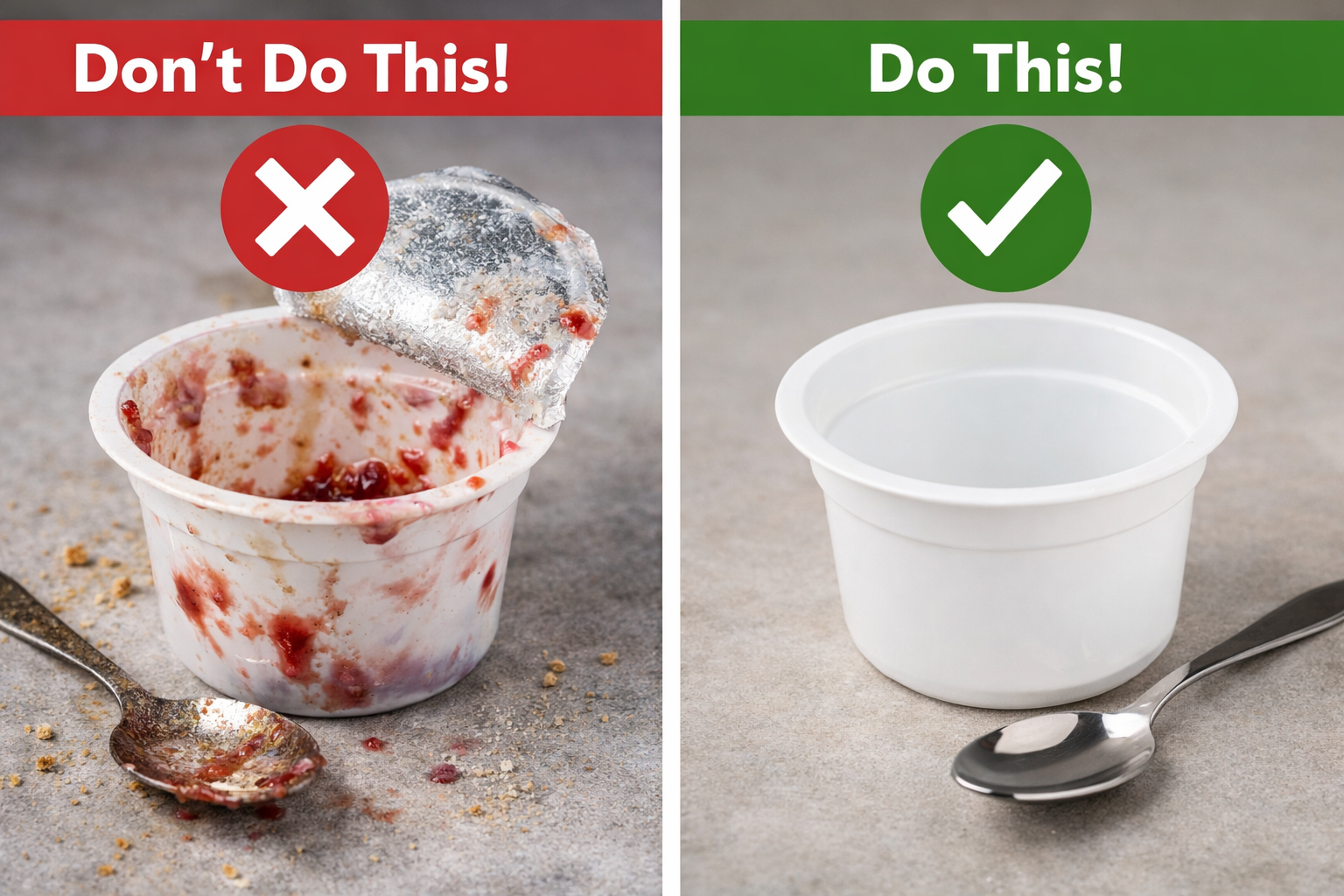
Would you believe how much trouble something as simple as not washing out a yoghurt pot can cause? Well, we’re about to tell you.
When food residue is left inside containers, it doesn’t just affect that one item. Once it enters the recycling stream, it can spread onto other materials such as paper and cardboard. These materials are particularly sensitive to contamination, and even small amounts can make them unsuitable for recycling.
Take that yoghurt pot as an example. As it enters our Materials Recycling Facility, it moves through a series of machines and gets bounced around the system. Along the way, it can come into contact with paper and card that people have carefully set aside for recycling. These materials are highly absorbent, so any leftover yoghurt can easily transfer onto them.
When those paper and card fibres are later reprocessed into new paper products, that contamination doesn’t just disappear. The material is formed into large reels of paper – often hundreds of feet long – which are scanned for imperfections. If too many small defects are detected, the entire reel can potentially be rejected at the very end of the process.
At our facility, materials go through a combination of automated sorting technology and manual quality checks. Our team works hard to remove contamination where possible, but this process isn’t always perfect. In some cases, contamination can reduce the quality of entire batches, meaning materials that could have been recycled are instead lost.
This is a wider issue across the UK. In fact, approximately 17% of all waste sent for reprocessing cannot be recycled due to contamination. This can be caused by items being placed in the wrong bin, but also by materials that are soiled with food or other residues.
From an operational perspective, food contamination can also create additional challenges on site. It can make materials harder to handle, increase the time needed for manual sorting, and in some cases impact the efficiency of the overall process. Most importantly, it affects the quality of the final material that is sent on to be made into new products.
What happens at the Materials Recycling Facaility?
When your recycling arrives at our facility, it is tipped, inspected and fed into our sorting system. Here, different materials are separated using a combination of machinery and manual input.
However, if materials arrive contaminated, they are much harder to process effectively. Paper stuck to food waste, containers filled with leftover liquids, or heavily soiled packaging can all interfere with the system.
Our quality control team plays a key role in removing these items, but the reality is that prevention at the source is far more effective than trying to fix the issue later.
See the full process here
Simple steps that make a difference
The good news is that this is an easy fix. Recycling doesn’t need to be complicated.
- Empty containers fully
-
Give them a quick rinse (it doesn’t need to be perfect)
These small steps help keep materials clean and ensure they can be successfully processed.
Final thoughts
Recycling works best when materials are clean, dry and correctly sorted. While our team works hard to manage contamination at our facility, tackling the issue starts before materials even leave your home or business.
Rinsing out containers might seem like a small step, but it plays a big role in protecting the recycling process, improving material quality, and helping valuable resources stay in circulation.
If you’re ever unsure about how to dispose of a material, our team is always on hand to help with clear, practical guidance.
FAQs
Do I really need to rinse out recycling before putting it in the bin?
Yes, you need to rinse recycling out before putting it in the bin. Even small amounts of leftover food or liquid can contaminate other recyclable materials such as paper and cardboard, reducing the quality of the recycling load.
What happens if I don’t rinse out yoghurt pots, tins or containers?
If you don't rinse out food residue it can spread onto surrounding materials as items move through the recycling process. This contamination can make otherwise recyclable materials unsuitable for reprocessing.
Can dirty recycling contaminate an entire recycling load?
Yes, dirty recycling can contaminate a DMR load. Contamination from food waste, liquids or incorrect items can affect large batches of recycling, sometimes causing materials to be rejected during reprocessing.
Why does food contamination matter in recycling?
Food contamination lowers the quality of recyclable materials and makes them harder to process. It can also increase manual sorting time and reduce the efficiency of the recycling process.
Do recycling containers need to be completely clean?
No, recycling containers do not need to be sparkling clean. Containers do not need to be spotless. A quick rinse to remove leftover food or liquid is usually enough.
Can greasy cardboard and food-soiled paper be recycled?
In many cases, heavily soiled paper and cardboard cannot be recycled because the fibres absorb grease and food residue.
What are the most common causes of recycling contamination?
Common contaminants include food waste, liquids, textiles, nappies, wipes, electrical items and vapes placed in recycling bins.
What happens to contaminated recycling at a Materials Recycling Facility?
Our team removes as much contamination as possible through automated sorting technology and manual quality checks, but not all contamination can be removed once it enters the system.
