

Recycle Week is back from 14–20 September 2026, reminding us that everyone’s recycling efforts are worth it.
At J&B Recycling, recycling is naturally a big part of what we do. However, before an item reaches the recycling bin, there is another important question we should all ask:
Could this be reused first?
Reusing an item keeps it in use for longer, reduces the need for new products and prevents perfectly usable materials from becoming waste. It can also save money - which is never a bad thing!
What is the difference between reuse and recycling?
Reuse and recycling are both important, but they are not quite the same.
Reusing means continuing to use an item in its existing form, either for its original purpose or for something new. Recycling involves collecting and processing waste materials so they can be used to manufacture new products.
For example, a glass jar could be washed and reused for storage. When it is no longer suitable for that purpose, it may then be recycled in accordance with your local collection guidance.
Recycling gives materials another opportunity to become something new, but reuse can delay the point at which an item becomes waste altogether.
The waste hierarchy
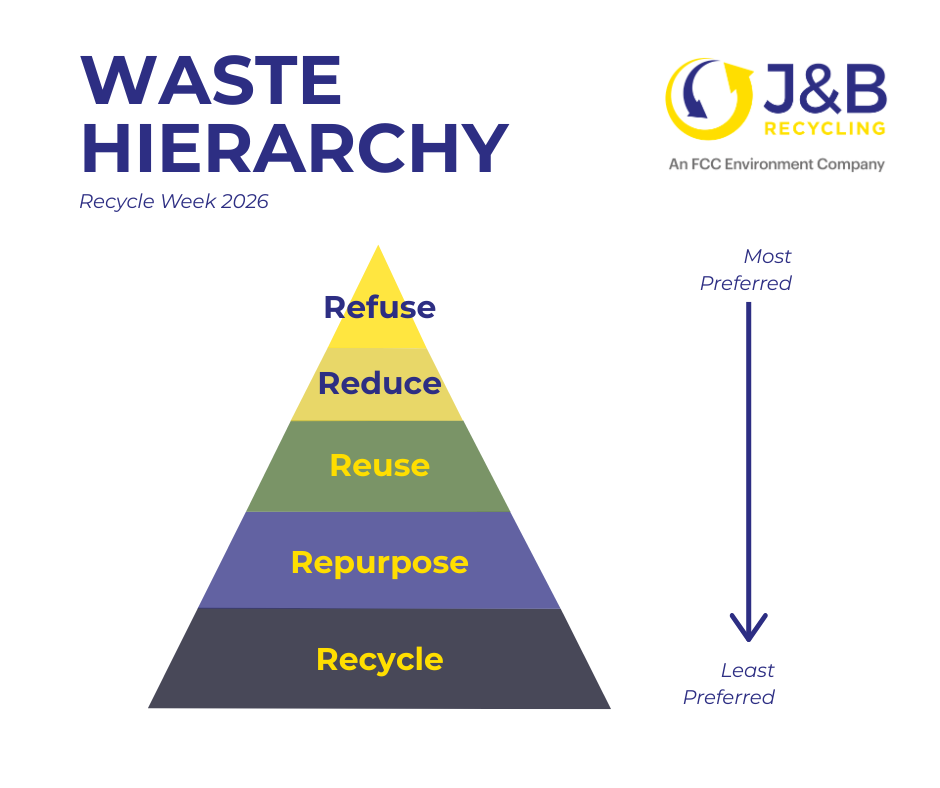
Within the waste industry, the 5 Rs provide a simple framework for reducing waste and keeping resources in use for as long as possible:
The first step is to refuse unnecessary items, particularly single-use products and excessive packaging. Next, we should reduce what we consume by purchasing only what is needed and selecting products that generate less waste.
Where possible, items should then be reused. Refillable containers, reusable bags, donated furniture and repaired equipment are all examples of extending a product’s useful life. If an item can no longer fulfil its original purpose, it may be possible to repurpose it instead. For example, glass jars can become storage containers, while old clothing can be turned into cleaning cloths.
Finally, when an item cannot be refused, reduced, reused or repurposed, it should be recycled correctly where possible. Recycling enables valuable materials to be recovered, processed and used to manufacture new products. You can see how recyclable materials are sorted at J&B Recycling here: What happens to your kerbside recycling? | J&B Recycling’s Sorting Processes.
The 5 Rs demonstrate that recycling is important, but it is not the only action we can take. By making thoughtful choices and keeping products in use for longer, we can conserve resources and reduce the amount of waste requiring treatment or disposal.
Simple ways to reuse more at home
You do not need to turn every empty container into an elaborate craft project. Sometimes reuse can be as simple as finding another practical purpose for something you already own.
Ideas include:
- Reusing jars and containers for storage.
- Taking reusable bags when shopping.
- Refilling water bottles instead of purchasing single-use bottles.
- Donating unwanted clothing, furniture and household items.
- Repairing electrical items where it is safe and practical to do so.
- Passing children’s clothes, toys and books on to another family.
- Using both sides of a sheet of paper before recycling it.
- Choosing reusable lunchboxes, cups and cutlery.
Before throwing something away, ask whether somebody else could use it. Charity shops, local reuse organisations, online marketplaces and community groups can all help unwanted items find a new home.
Your old lamp might not suit your living room anymore, but it could be exactly what someone else has been looking for!
How can businesses encourage reuse?
Reuse is not limited to the home. Businesses can also look closely at the materials and products moving through their workplace.
This could include:
- Introducing reusable cups, bottles and kitchenware.
- Reusing suitable boxes and packaging.
- Donating surplus office furniture and equipment.
- Creating a stationery or equipment reuse area.
- Using refillable products where possible.
- Repairing equipment before automatically replacing it.
- Working with suppliers to reduce unnecessary packaging.
- Sharing surplus materials between sites or departments.
The most effective changes are often the simplest. Placing clearly labelled reuse points around a workplace can make it easier for employees to share stationery, folders, packaging and other useful items.
Businesses should still ensure that anything which cannot be reused is separated into the correct waste stream. Clear signage, suitable containers and guidance for employees can all help prevent recyclable materials from being lost in general waste.
When reuse is not possible, recycle correctly
Not every item can be safely or practically reused forever. When an item reaches the end of its useful life, disposing of it correctly gives its materials the best opportunity to be recovered.
Before placing something in a recycling bin:
- Check what is accepted by your local authority or waste provider.
- Empty containers of any remaining food or liquid.
- Keep recyclable materials loose unless instructed otherwise.
- Do not place batteries, electrical items or pressurised containers in standard recycling bins.
- Keep reusable textiles out of mixed recycling and take them to an appropriate donation or textile collection point.
Recycling guidance can differ between areas and waste services, so checking before disposing of an unfamiliar item is always worthwhile.
Making every effort count
This Recycle Week, why not challenge yourself, your household or your workplace to reuse one more thing?
It could be bringing a reusable cup to work, donating unwanted clothes or finding another use for a cardboard box before it enters the recycling system. No change is too small to be worthwhile - and thankfully, nobody needs to become an expert in turning yoghurt pots into plant pots overnight!
At J&B Recycling, we help organisations manage their waste responsibly by providing appropriate containers, reliable collections and practical guidance. We can also support customers with signage, waste audits and solutions designed around the materials produced at their sites.
To discuss your organisation’s recycling and waste-management requirements, contact the J&B Recycling team here J&B Recycling - J&B Recycling I Waste Management & Recycling I…
