Waste Contamination – How to Prevent It
When the wrong materials are placed in your bin, it’s called contamination. This can happen with any bin – recycling, food, glass, or general waste. Contamination reduces recycling quality, increases costs, and in some cases means the entire load has to be treated as general waste.
What To Do if Your Bin is Contaminated
-
Remove the items – If you take out the contamination, we can collect your bin as normal.
-
Collect as general waste – If the contamination can’t be removed, we’ll collect the bin as general waste and disposal charges will apply.
Keeping waste streams clean means more can be recycled and fewer materials are lost.
How Contamination Happens
Contamination varies by bin type:
-
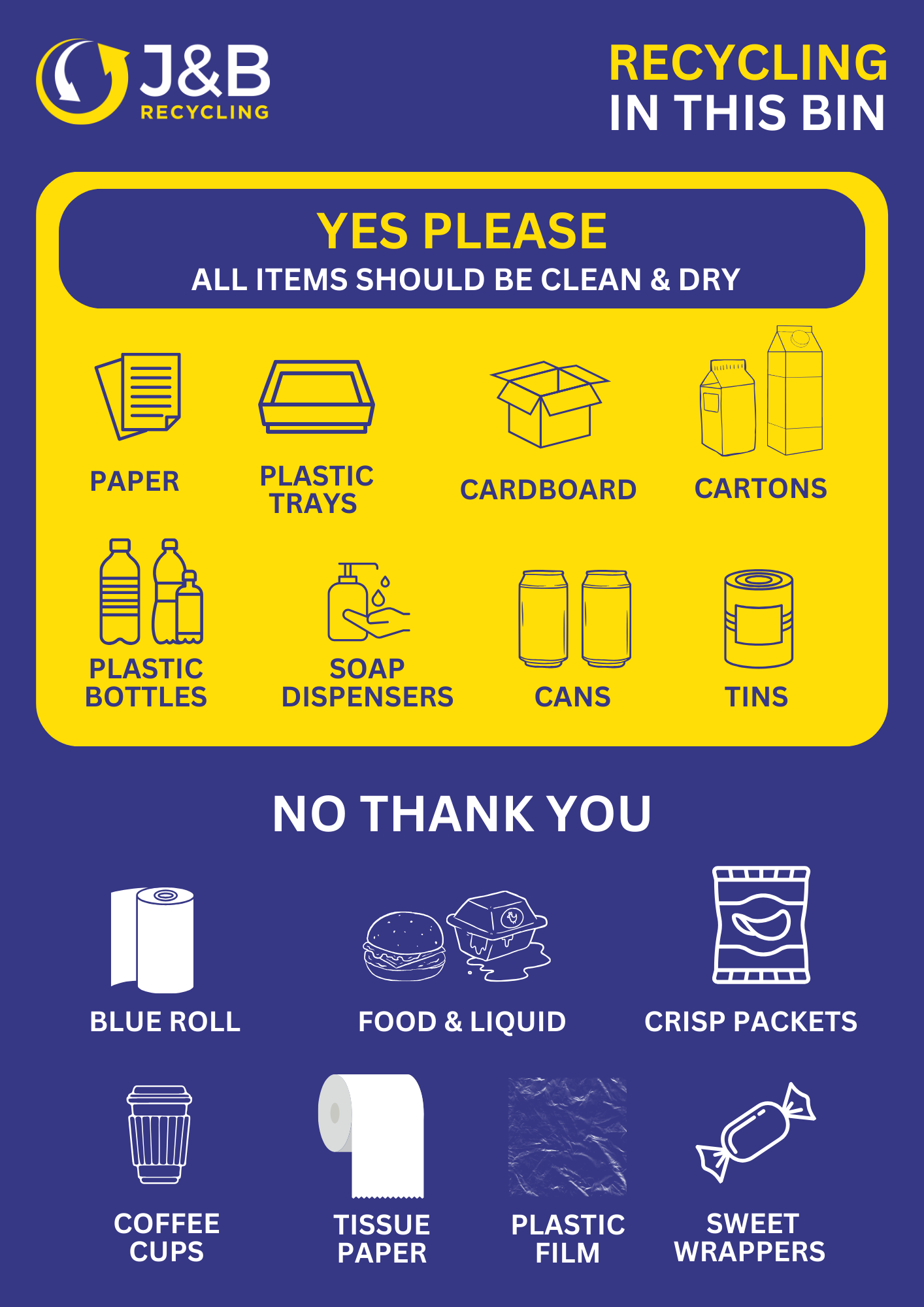
Recycling bins – food, liquids, plastic bags, textiles, nappies, electricals.
-
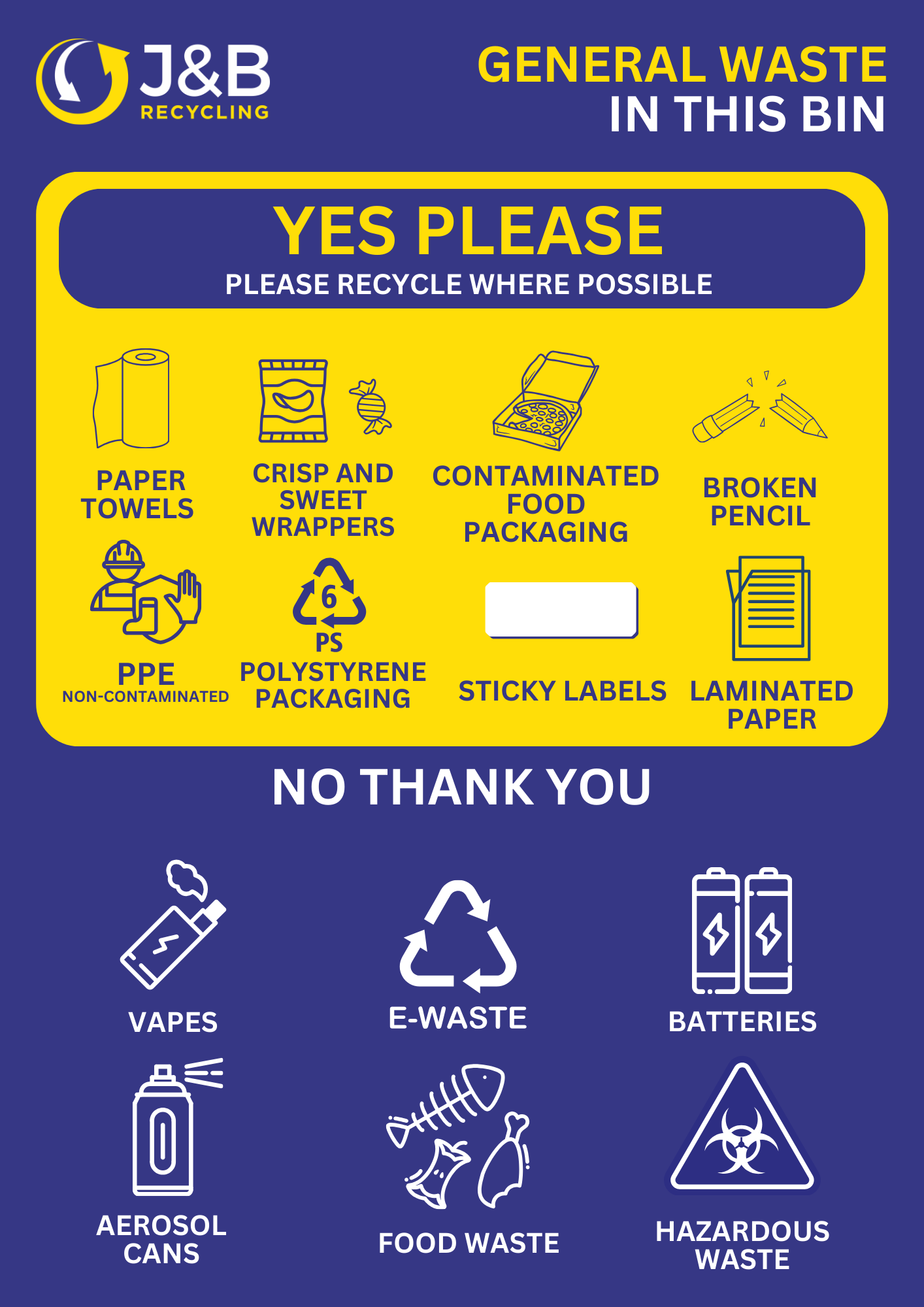
General waste bins – batteries, vapes, or hazardous items (risk of fire).
-
Glass bins – ceramics, crockery, light bulbs, or non-glass items.
-
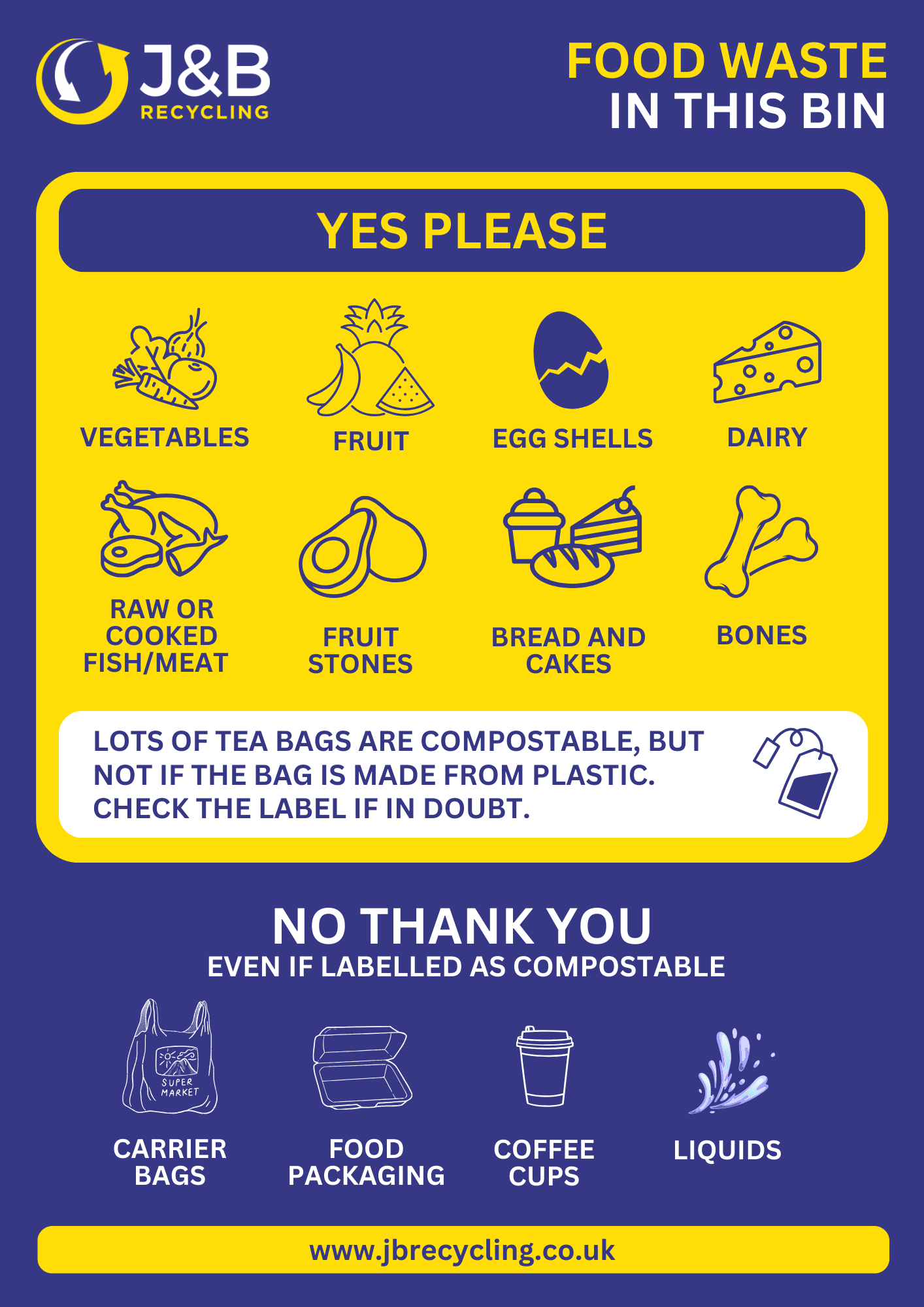
Food bins – packaging, plastics, or liquids.
Even small amounts can spoil an entire bin.
Why Preventing Contamination Matters
Reducing contamination benefits your business and the environment:
-
Lower costs – avoids disposal and landfill tax charges.
-
Environmental gains – more waste recycled or composted.
-
Compliance – supports recycling targets and shows sustainability commitment.
Note: landfill tax is rising to £126.15 per tonne in 2025, making clean segregation even more important.